The address tells the story of the shop that has not moved, the business that grew while the rest of Hong Kong did four governments, three recessions, one handover, one financial crisis, a pandemic, and a generational shift in what it means to be a tailor in the city.
This is a time-lapse perspective that comes with being rooted in place.
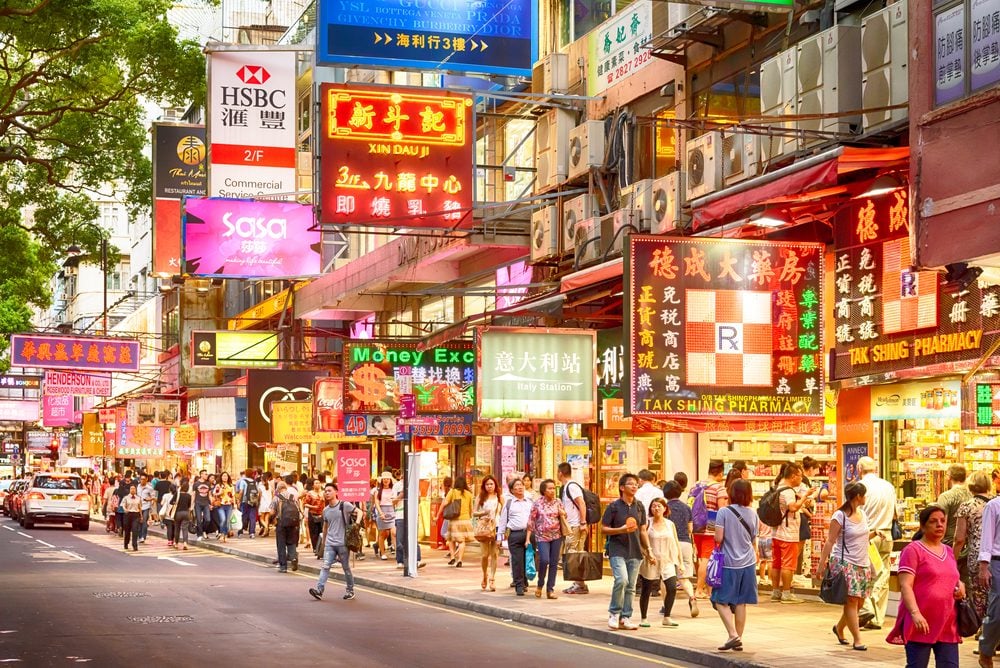
Nathan Road is a bustling shopping street in Tsim Sha Tsui, Hong Kong
Read More
What Doesn’t Move
Most writing about bespoke tailoring focuses on the craft. The cloth, the canvas, the cut, the fitting, the relationship between the cutter and the body. The writing almost never focuses on the geography, which, especially in Hong Kong, is doing more work than is generally acknowledged.
Sam’s Tailor has been at the same address — Shop K, G/F, Burlington Arcade, 90-94C Nathan Road — since Narindas Sam Melwani signed the lease in 1957. The address is now 68 years old. The lease has been renewed repeatedly. The business has expanded into adjacent units. But the core original shop unit, the original shop unit, has not moved.
This matters because the alternative — moving — is what most Hong Kong tailoring businesses do. When rents rise, when the building is sold, when the district loses its identity, when a successor wants to modernise, the natural move is to relocate.
Hong Kong’s tailoring industry has relocated several times over the past 68 years. The Mirador Mansion in Tsim Sha Tsui, which housed approximately 500 individual tailors at the industry’s 1970s peak, is still standing, but most of those tailors are not. The industry’s centre of gravity has shifted multiple times, often following changes in the underlying real estate.
Sam’s did not follow. Sam’s stayed. The decision to stay is, in fact, the unusual option. The business is large enough now that it could justify a move to Central, to a more modern retail format, to a place that signals contemporary luxury more clearly than a Burlington Arcade shop unit does. The business has instead invested in the address it has.
The Building, the District, and the City
Burlington Arcade is a small commercial building on Nathan Road. It is not a glamorous building. It is functional, mid-century, and visually unremarkable. The kind of building a Western luxury brand would not, on first principles, choose as its flagship location. The rent is likely below the city average for the area. The foot traffic is steady without being overwhelming. The building pre-dates the current iteration of Nathan Road’s commercial character, so is a journey into a retail history of its own.
This is the point: The building signals continuity. The customers who have been coming to Sam’s for decades — many of them since before Roshan was born — are not coming because of the building. They are coming because of what happens inside it. The building is the frame; the work is the content. The relationship between the two has been stable for longer than most of the customers have been alive.
Tsim Sha Tsui as a district has been through multiple identities. The 1960s and 1970s were the Mirador Mansion era — the peak of the mass-custom tailoring market, with hundreds of independent tailors operating in a single building, serving mostly walk-in tourist trade and budget-conscious business travellers. The 1980s and 1990s saw the migration of the market upmarket, with established names consolidating and moving away from the volume trade. The 2000s and 2010s saw the contraction of the district’s tailoring identity as tourism patterns shifted and Hong Kong’s role as a manufacturing centre diminished.
Through all of this, Sam’s stayed in the same shop unit. The address is the continuity. The business that is recognisable today is recognisable in part because the place where it is recognisable has not changed.
What Six Decades in One Place Does to a Business
A business that stays in one place for six decades accumulates relational capital that a business that moves does not. The customers, the staff, the suppliers know the address. The taxi drivers know the address, its in their muscle memory, as they pick someone up from the airport. The way-finding instincts of the city have, over time, encoded the address into the local knowledge Tsim Sha Tsui.
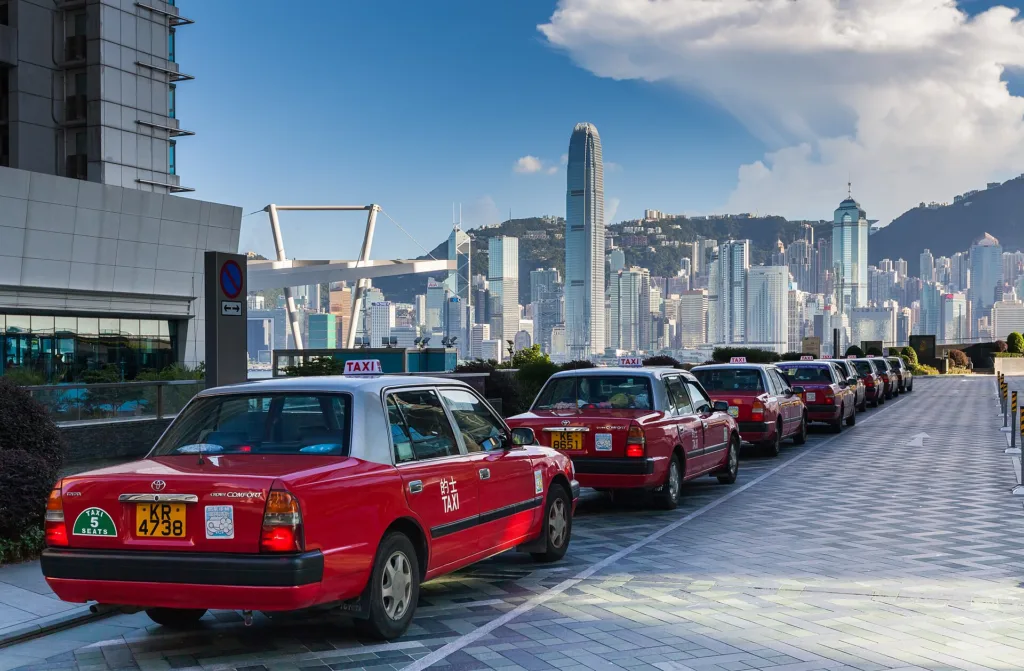
Hong Kong Taxis in Kowloon (Picture by Diego Delso).
This is not sentimental. It is operational. When a customer in 2026 calls Sam’s Tailor to make an appointment, they are calling a number that has been answered in the same shop unit, by people who have known the same customers, for generations. The continuity is not just historical — it is living in the relationships that the business has maintained. Get into a Taxi in Kowloon, most likely they already know how to get to Sam’s.
Roshan has leveraged this continuity in a way that no previous generation could. The TikTok presence, the Instagram content, the YouTube clips, the Michael Palin footage from Around the World in 80 Days — all of it points to a specific address. The address is the brand. The brand is the address. The two cannot be separated.
The Cultural Map of Tsim Sha Tsui
Tsim Sha Tsui is not only a tailoring district. It is also a tourist district, a museum district (the Hong Kong Museum of History, the Hong Kong Space Museum, the Hong Kong Cultural Centre), a transport hub (the Star Ferry terminal, the MTR interchange), a luxury retail district (the Harbour City complex, the Elements mall), and increasingly a nightlife and dining destination. The address — Nathan Road — is one of the most heavily trafficked thoroughfares in Hong Kong.
Sam’s location on Nathan Road, in the Burlington Arcade, places the business in the middle of all of this without being a part of any of it specifically. The shop is a tailor’s shop, not a tourist attraction, not a museum, not a mall. It is a working business in a city context. The fact that it has stayed a working business in that context, for 68 years, is itself a kind of statement.
The statement is: this is a place where work is done. The work has been done here for longer than most of the people who pass by on Nathan Road have been alive. The work will be done here next year, and the year after, and the year after that. The address is the commitment.
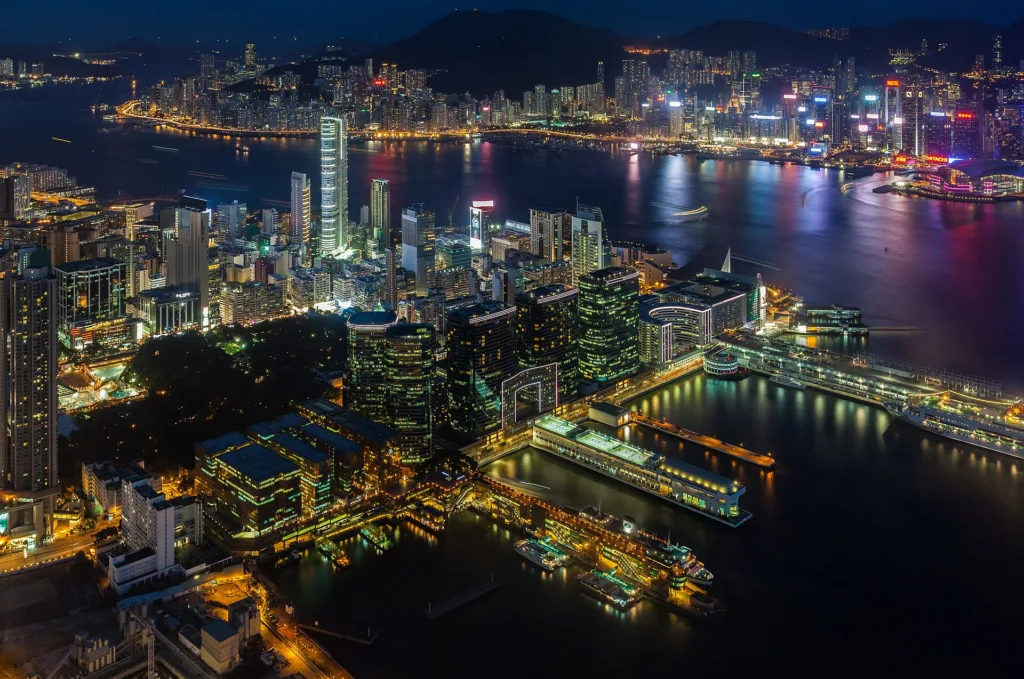
Tsim Sha Tsui lit up at night (Picture by Diego Delso)
The Burdens and Benefits of Rootedness
A rooted business has burdens that a non-rooted business does not. The rent has to be paid. The lease has to be renewed. The building has to be maintained. The district’s fortunes affect the business directly — when tourism dips, when the area’s character shifts, when a major event disrupts foot traffic, the business feels it. There is no diversified portfolio. There is one address, and the address has to keep working.
The benefits are real, and they compound. The relational capital I mentioned earlier is one. The institutional memory is another. The fourth generation of Melwanis in the business — Roshan’s children — will inherit not just a business but a place in the city, with all the institutional recognition that comes from six decades of continuous operation at a known address. The grandfather’s customers are still alive. The father’s customers are still active. The son’s customers are being built.
Frequently Asked Questions
Q: Where is Sam’s Tailor located?
A: Sam’s Tailor has been at Shop K, G/F, Burlington Arcade, 90-94C Nathan Road, Tsim Sha Tsui, Kowloon, Hong Kong since 1957. The shop has never moved from this original location.
Q: How long has Sam’s Tailor been at the same address?
A: Since 1957 — more than 68 years. Sam’s Tailor has operated continuously from the same Burlington Arcade shop unit, through four governments, three recessions, the 1997 handover, the 2008 financial crisis, and the COVID-19 pandemic.
Q: Why hasn’t Sam’s Tailor moved?
A: The business chose to stay rather than follow the industry’s centre of gravity. While most Hong Kong tailors relocated as districts changed, Sam’s invested in the address it had. The address has become inseparable from the brand.
Q: What is significant about the Burlington Arcade location?
A: Burlington Arcade is a functional mid-century commercial building on Nathan Road. It is not a luxury flagship — it signals continuity. The building pre-dates the current retail character of Nathan Road and serves as a landmark that taxi drivers, customers, and suppliers have known for decades.
Q: Has Tsim Sha Tsui changed around Sam’s Tailor?
A: Dramatically. Tsim Sha Tsui went through the Mirador Mansion tailoring era of the 1960s–70s, the upmarket consolidation of the 1980s–90s, and the contraction of the 2000s–2010s. Through all of this, Sam’s stayed in the same shop unit. The district is now a mix of tourism, museums, luxury retail, transport hubs, and dining.
Q: What does “the address is the brand” mean for Sam’s Tailor?
A: Roshan Melwani’s social media presence — TikTok, Instagram, YouTube — all points to one specific address. Customers who found Sam’s through a 60-second video still arrive at the same Burlington Arcade shop where Narindas Melwani fitted his first clients in 1957. The digital content drives people to a physical place that has not changed.
Q: What happens when Sam’s Tailor’s lease ends?
A: The lease has been renewed repeatedly and the business has expanded into adjacent units. The Melwani family has shown a consistent commitment to the Burlington Arcade location across three generations, and there is no indication the next generation intends to move.